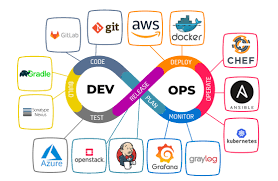
DevOps is a culture and practice that integrates development and operations to improve collaboration and efficiency.
DevOps helps organizations release software faster and maintain higher reliability.
Bridging Development and Operations for Faster Software Delivery
DevOps is a combination of Development (Dev) and Operations (Ops). It is a modern approach that helps teams build, test, and release software faster and more efficiently.
DevOps focuses on collaboration, automation, and continuous improvement.
Define project goals, requirements, and development roadmap.
Write and manage application code using version control systems.
Automatically build and test code whenever changes are made.
Deploy applications automatically to production environments.
Track application performance and fix issues quickly.
Gather user feedback to improve future releases.
Version control system for managing source code.
Automation server for CI/CD pipelines.
Containerization platform for consistent environments.
Container orchestration system for scaling applications.
Automation tool for configuration management.
Cloud platforms used for hosting and scaling applications.
DevOps enables organizations to deliver value to customers quickly and reliably.
The future of DevOps includes AI-driven automation, cloud-native development, advanced security integration, and intelligent monitoring systems.
DevOps will continue to evolve as the backbone of modern digital transformation.