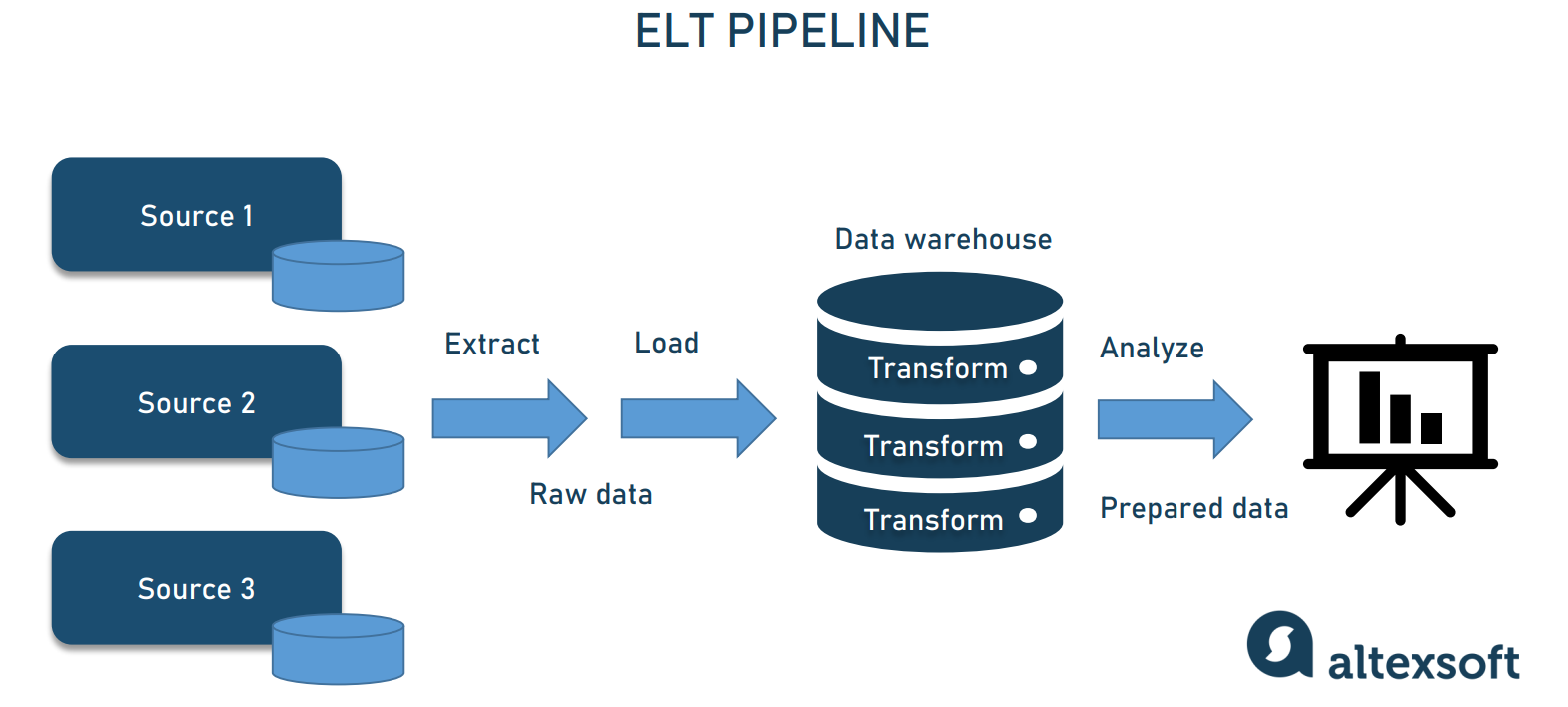
Data engineering focuses on building systems that collect, process, and store large volumes of data.
Without data engineers, organizations cannot effectively analyse or utilise their data.
Data Analytics in AI refers to the process of analyzing large volumes of data using artificial intelligence technologies to generate intelligent insights, automate decisions, and predict future outcomes.
AI transforms raw data into intelligent, actionable knowledge.
Traditional data analytics focuses on examining datasets to find trends and patterns. However, when combined with Artificial Intelligence, analytics becomes:
AI-powered analytics does not just analyze data — it learns from it.
Data is collected from multiple sources such as databases, IoT devices, APIs, social media, sensors, and cloud platforms.
Removing duplicates, handling missing values, transforming formats, and preparing structured datasets for AI models.
AI models learn from data using algorithms like:
AI predicts future outcomes and recommends optimal decisions.
Predictive and Prescriptive Analytics are the backbone of AI-driven systems.
Disease prediction, medical image analysis, patient risk assessment.
Fraud detection, credit scoring, algorithmic trading.
Personalized recommendations, demand forecasting, customer behaviour analysis.
Threat detection, anomaly detection, automated response systems.
Traffic prediction, energy optimization, public safety analytics.
AI analytics enables real-time intelligent decision systems.
The future of AI-based analytics includes:
The combination of Big Data + AI will define the next generation of digital transformation.
Data Analytics in Artificial Intelligence is reshaping industries by turning massive data into predictive intelligence. Businesses that leverage AI analytics gain faster insights, smarter automation, and strategic advantage in competitive markets.
In the AI era, data is not just information — it is intelligent power.