Artificial Intelligence Basics

Artificial Intelligence (AI) is a technology that allows machines to think, learn, and make decisions like humans.
AI enables computers to perform tasks such as learning from data, recognising speech, and solving problems.
AI improves efficiency in education, healthcare, security, and business.
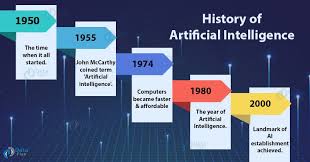
Artificial Intelligence (AI) is one of the most transformative technologies of the modern era. It refers to the simulation of human intelligence in machines that are programmed to think, learn, and make decisions.
The foundation of AI began with early computer science research. In 1950, Alan Turing introduced the concept of the Turing Test, which evaluated whether a machine could exhibit intelligent behaviour similar to a human.
The term “Artificial Intelligence” was officially introduced at the Dartmouth Conference in 1956. This marked the beginning of AI as an academic discipline.
During this period, AI research funding declined due to slow progress and technological limitations. These periods are known as "AI Winters."
With the rise of big data, cloud computing, and powerful processors, AI experienced rapid growth. Machine learning and deep learning revolutionised industries such as healthcare, finance, and transportation.
AI systems can automate routine and repetitive work, increasing productivity and reducing human effort.
AI analyses vast amounts of data quickly, helping businesses make data-driven decisions.
AI reduces human error in areas such as medical diagnosis and financial forecasting.
AI-powered systems like chatbots and virtual assistants operate continuously without fatigue.
AI accelerates scientific research, drug discovery, and technological advancements.
Building AI systems requires significant investment in infrastructure, data, and expertise.
Automation may reduce demand for certain job roles, especially repetitive manual tasks.
AI raises ethical issues such as bias, privacy concerns, and data misuse.
AI systems cannot fully replicate human empathy and emotional understanding.
AI performance heavily depends on the quality and quantity of training data.
The future of AI includes advancements in generative AI, autonomous systems, robotics, and intelligent automation. AI careers such as Machine Learning Engineer, AI Researcher, and Data Scientist are expected to grow significantly.
We have also explained this topic on quora: Read detailed answer on quora
What is Artificial Intelligence in simple words?
Artificial Intelligence is technology that enables machines to think and learn like humans.
Is AI good or bad?
AI has both advantages and disadvantages. Its impact depends on how responsibly it is developed and used.
What is the future of AI in 2025?
AI is expected to expand in automation, healthcare, finance, and education sectors.
At Skillveda-EFT, we aim to provide structured and practical knowledge about emerging technologies.